

Introduction
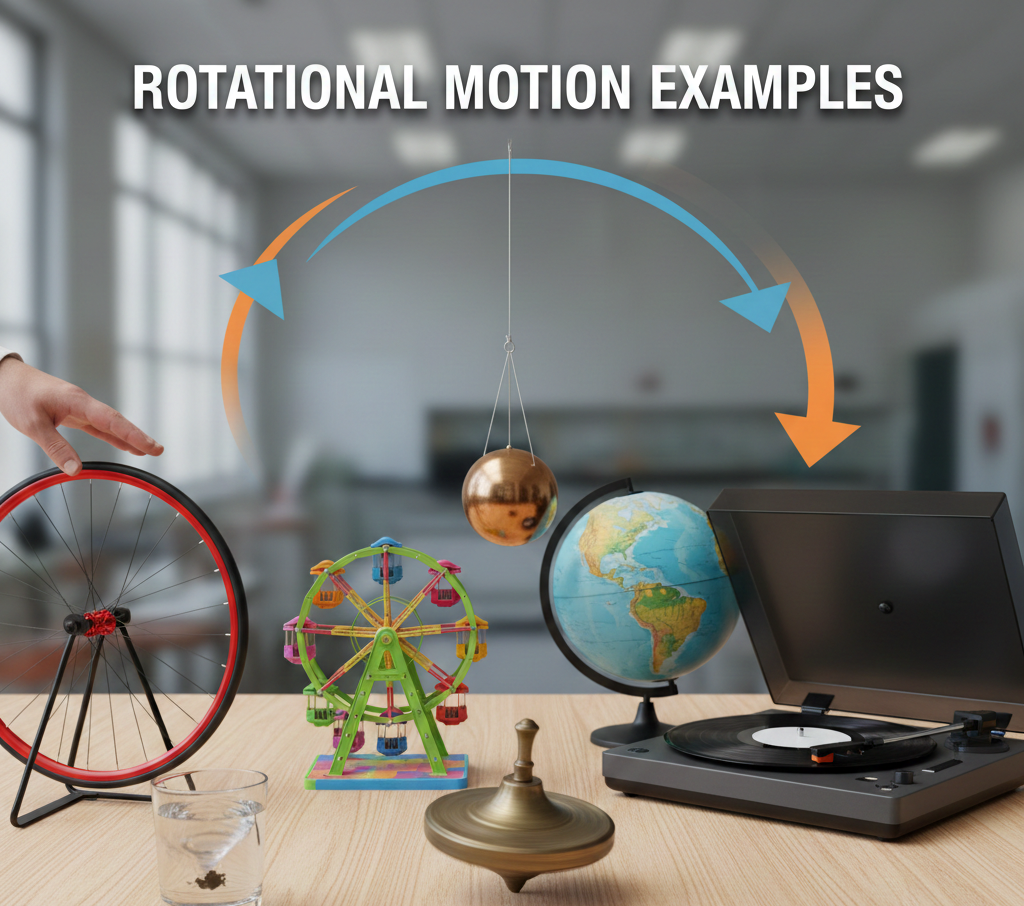
Rotational motion is all around us, from the spinning wheels of a car to the rotation of planets in space. It’s a type of motion where an object moves in a circular path around a central point. Whether it’s a simple everyday object or a complex machine, understanding rotational motion is key to appreciating how the world works. In this article, we’ll explore 10 fascinating examples of rotational motion, showing you how it plays a crucial role in various aspects of life.
What Is Rotational Motion?
Before diving into examples, let’s quickly define rotational motion. It refers to the motion of an object where every point on the object moves in a circle around a central axis. The object itself rotates, and the point on the object follows a circular trajectory. The best-known example is a wheel turning, but the concept extends to many other systems, both natural and man-made.
10 Real-Life Examples of Rotational Motion
-
The Wheels of a Car
One of the most common examples of rotational motion is the spinning of a car’s wheels. When you press the accelerator, the engine causes the wheels to rotate, propelling the car forward. The motion is a result of the rotational force from the engine transmitted to the wheels, enabling movement.
-
Spinning Tops
A simple yet fascinating example of rotational motion, spinning tops rely on the concept of angular momentum. The top spins around a fixed axis and slows down due to friction and gravity. It’s an excellent demonstration of rotational inertia and the forces at play when an object rotates.
-
Earth’s Rotation on Its Axis
The Earth’s rotation on its axis is a classic example of rotational motion that has a profound impact on our lives. The Earth spins once every 24 hours, causing the cycle of day and night. This motion is essential to life on Earth, affecting everything from the climate to the way time is measured.
-
Cycling
When you pedal a bicycle, the wheels rotate, allowing you to move forward. The rotational motion here is transferred from the pedals to the wheels via the gears and chain. The motion of the bike wheels is essential for getting around, and understanding the forces behind it helps explain why a cyclist’s speed depends on their pedaling force.
-
Electric Fans
Electric fans are designed to rotate and generate air circulation. The motor inside the fan turns the blades around a central point, creating the breeze that cools us down. The rotational speed of the blades determines the effectiveness of the fan, which is a direct application of rotational motion in our daily lives.
-
Clock Hands
The hands of a clock are another everyday example of rotational motion. The hands rotate around a central axis in a circular motion, marking the passage of time. The motion of the clock hands is regulated by a gear system inside the clock, making it a simple yet effective representation of rotational dynamics.
-
Wind Turbines
Wind turbines convert the kinetic energy of the wind into electrical energy through rotational motion. The blades of the turbine spin when the wind blows, causing the rotor to turn. This motion is then transferred to a generator, which produces electricity. It’s an excellent example of how rotational motion can be harnessed for renewable energy.
-
Disc Brakes in Cars
When a car’s disc brakes are applied, the brake pads press against the rotating discs (rotors) attached to the wheels. This friction slows down the rotation of the wheels, ultimately bringing the car to a stop. This system showcases how rotational motion can be controlled and utilized for safety.
-
Merry-Go-Rounds
Merry-go-rounds at amusement parks rotate around a central axis, with people and objects moving in circular paths. This is an example of rotational motion that’s driven by an external force, usually a motor, or in some cases, by human effort. It’s a fun way to experience rotational motion firsthand!
-
Electric Motors
Electric motors are the backbone of countless machines, from household appliances to industrial equipment. These motors rely on rotational motion to perform work. The motor’s rotor spins when electricity flows through the system, creating rotational force that powers devices like washing machines, drills, and fans.
Why Is Rotational Motion Important?
Rotational motion is crucial in many fields, from mechanics to biology. Here’s why it matters:
-
Engineering Applications: Rotational motion is vital in machinery design, whether it’s turbines, gears, or engines. Understanding how to control rotational speed and torque can significantly improve performance and efficiency.
-
Sports: Many sports involve rotational motion, from spinning a basketball to a gymnast performing a somersault. Athletes often use the principles of rotational motion to enhance their performance.
-
Astronomy: The rotation of celestial bodies like planets and moons plays a significant role in space exploration and our understanding of the cosmos.
FAQ Section
1. What is an example of rotational motion in nature?
The Earth’s daily rotation around its axis is a prime example of rotational motion in nature. This motion influences everything from day and night cycles to climate patterns.
2. How does rotational motion affect cars?
In cars, rotational motion is seen in the movement of the wheels. The engine’s rotational energy is transferred to the wheels, allowing the car to move.
3. Can rotational motion be controlled?
Yes, rotational motion can be controlled through various mechanisms like gears, brakes, and motors. For instance, disc brakes control the rotational motion of a car’s wheels to slow it down.
4. Why is rotational motion important in wind turbines?
In wind turbines, rotational motion is essential for converting wind energy into electrical energy. The blades of the turbine rotate, which powers a generator to produce electricity.
Conclusion
Rotational motion is more than just a scientific concept; it’s a fundamental part of our daily lives, influencing everything from the movement of vehicles to the generation of electricity. Whether you’re cycling, using a fan, or observing the rotation of the Earth, rotational motion is all around you. By understanding its principles, you gain a deeper appreciation for how the world works and how this type of motion powers much of the technology we rely on.