Skip to content
Physicsfundamentalss physicsfundamentalss.com
  • Home
  • Physics
    • Problem Solving
    • Experiments & Practical Physics
    • Mathematical Tools for Physics
    • Modern Physics
    • Optics
    • Electricity & Magnetism
    • Thermodynamics
    • Mechanics
    • Study Resources
    • Waves & Oscillations
  • Education
  • Blog
  • About Us
  • Contact Us
Home » Thermodynamics
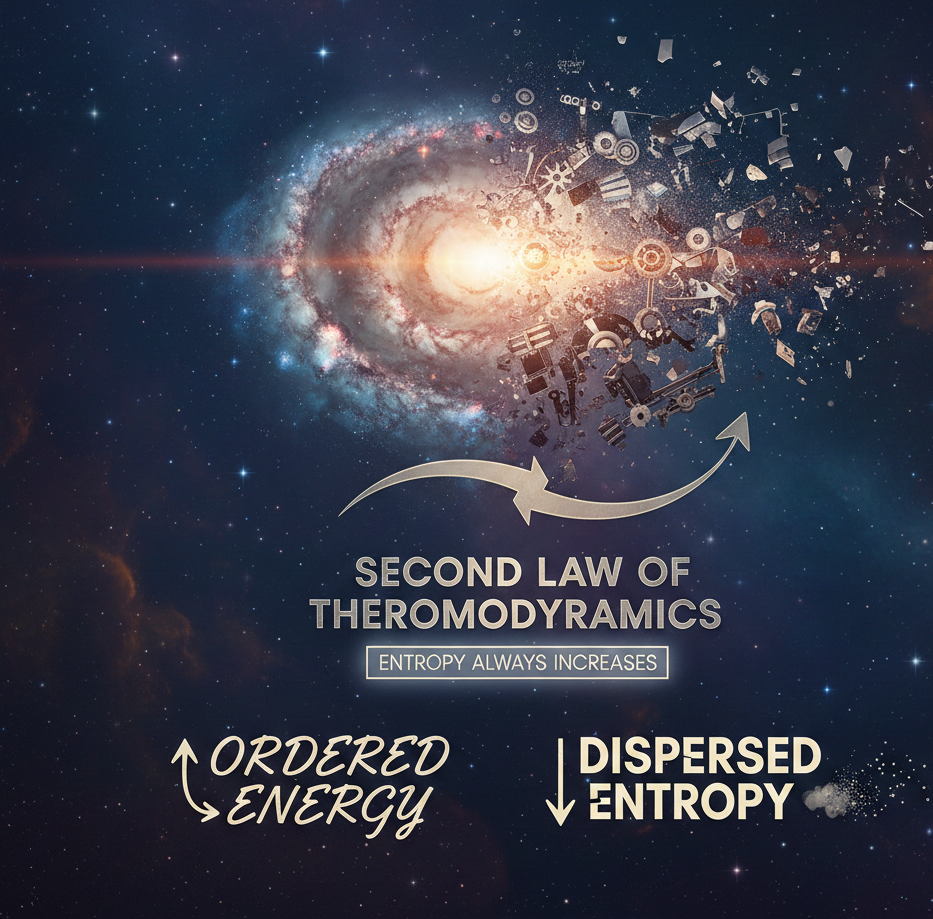
What Does the Second Law of Thermodynamics State?
Posted inThermodynamics

What Does the Second Law of Thermodynamics State?

Posted by abdullah.totaluk@gmail.com January 8, 2026
If you’ve ever wondered why hot coffee cools down on its own but never heats…
Read More
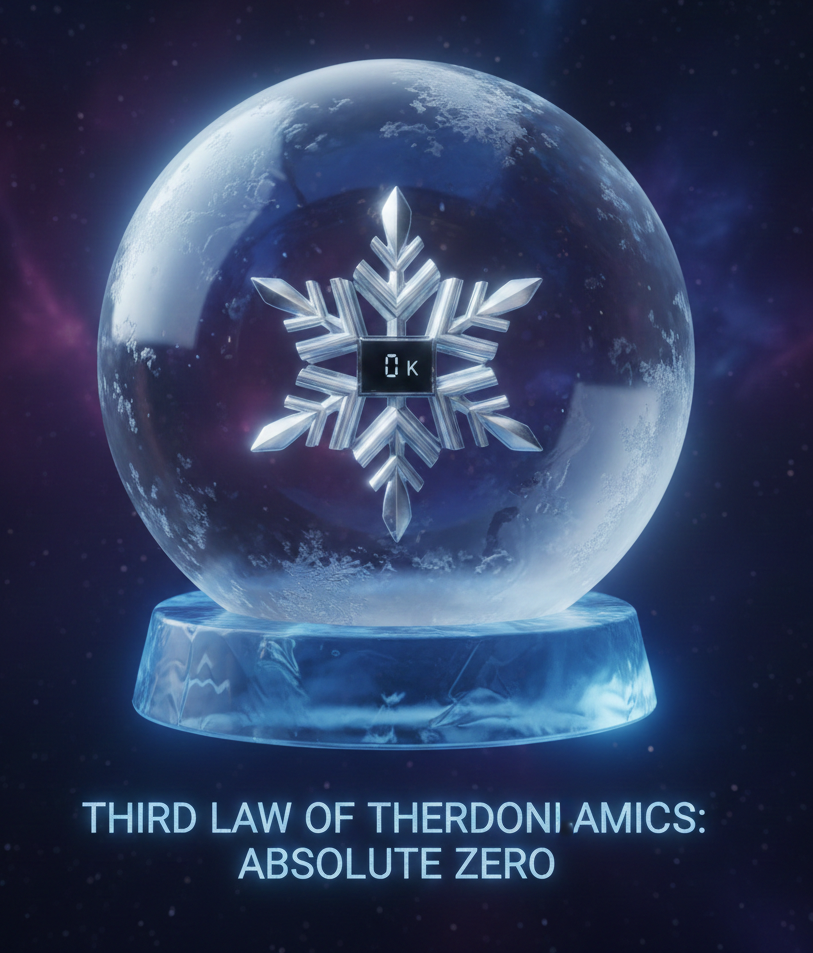
Introduction: Why Absolute Zero Is More Than Just a Number Have you ever wondered what happens when things get as cold as physically possible? This question leads us straight into the third law of thermodynamics, one of the most fascinating principles in physics. Unlike the first and second laws, which deal with energy and entropy in everyday processes, the third law explores the strange behavior of matter near absolute zero. In simple terms, the third law of thermodynamics explains how entropy behaves as temperature approaches absolute zero (0 Kelvin). This law isn’t just theoretical—it plays a critical role in physics, chemistry, cryogenics, and modern technology. Let’s break it down step by step, without jargon overload, and see why this law matters more than you might think. What Is the Third Law of Thermodynamics? The third law of thermodynamics states: As the temperature of a perfect crystalline substance approaches absolute zero, its entropy approaches zero. In plain language, this means that at absolute zero, a perfectly ordered crystal would have only one possible microscopic arrangement, leaving no randomness or disorder. Key ideas behind the law: Absolute zero is 0 Kelvin (−273.15°C) Entropy measures disorder or randomness At absolute zero, molecular motion nearly stops Perfect order means minimum entropy This law helps scientists define entropy on an absolute scale, rather than just comparing changes. Understanding Entropy in Simple Terms Before going further, let’s quickly clear up what entropy really means. Entropy is often described as: Disorder Randomness The number of ways particles can be arranged Think of a messy room versus a clean one: Messy room → high entropy Organized room → low entropy At absolute zero, particles are arranged in the most orderly way possible. No chaos, no randomness—just perfect structure. Absolute Zero: Can We Ever Reach It? What Is Absolute Zero? Absolute zero is the lowest theoretical temperature: 0 Kelvin −273.15°C −459.67°F At this temperature: Atomic motion is at its minimum Thermal energy is almost zero Entropy reaches its lowest possible value Is Absolute Zero Achievable? Here’s the twist: absolute zero cannot be reached. The third law of thermodynamics also implies that: It would take an infinite number of steps It would require infinite energy removal Scientists can get extremely close—within billionths of a Kelvin—but never actually reach 0 K. Mathematical Statement of the Third Law of Thermodynamics In thermodynamic terms, the law can be written as: lim (T → 0) S = 0 Where: T = temperature S = entropy This equation applies specifically to perfect crystalline substances. Real materials often have small imperfections, which can leave a tiny amount of residual entropy. Why the Third Law of Thermodynamics Matters You might be thinking, “If we can’t reach absolute zero, why does this law matter?” Great question. The third law has huge practical importance. Major implications include: Defining absolute entropy values Understanding material behavior at low temperatures Designing cryogenic systems Advancing quantum physics research Without this law, modern low-temperature physics would simply fall apart. Practical Applications of the Third Law of Thermodynamics 1. Cryogenics and Low-Temperature Physics Cryogenics deals with extremely low temperatures. The third law helps scientists: Predict how materials behave near 0 K Design superconducting systems Develop ultra-sensitive detectors 2. Superconductivity Some materials become superconductors at very low temperatures, meaning: Zero electrical resistance No energy loss Understanding entropy changes near absolute zero is essential for developing superconducting technologies. 3. Chemistry and Thermodynamic Calculations The third law allows chemists to: Calculate absolute entropies Predict reaction feasibility Understand phase transitions This is especially important in physical chemistry and chemical engineering. 4. Quantum Computing Quantum systems are extremely sensitive to thermal noise. Cooling systems guided by the third law help: Reduce entropy Maintain quantum coherence Improve computational accuracy Limitations and Real-World Considerations While powerful, the third law comes with limitations. It assumes: Perfect crystalline structures No defects or impurities In reality: Most substances are imperfect Some materials retain residual entropy Glasses and amorphous solids behave differently This doesn’t invalidate the law—it just means scientists must apply it carefully. Comparison With Other Laws of Thermodynamics Let’s put the third law in context. First Law: Energy Conservation Energy cannot be created or destroyed Second Law: Entropy Increases Natural processes increase total entropy Third Law: Entropy at Absolute Zero Entropy approaches zero as temperature approaches 0 K Together, these laws form the backbone of classical thermodynamics. Common Misconceptions About the Third Law “Entropy becomes zero for all substances at absolute zero” ❌ Not true. Only perfect crystals have zero entropy. “Absolute zero can be reached with better technology” ❌ The third law says it’s fundamentally impossible. “The law only matters in theory” ❌ It has real-world applications in physics, chemistry, and engineering. Simple Example to Visualize the Third Law Imagine a deck of cards: Shuffled deck → high entropy Perfectly ordered deck → low entropy As temperature drops: Molecular motion slows The “deck” becomes more ordered At absolute zero, the cards are arranged in one exact order—no alternatives. That’s minimum entropy. Importance of the Third Law in Education and Research The third law of thermodynamics is a cornerstone topic in: Physics curricula Chemistry textbooks Engineering studies It bridges classical thermodynamics and quantum mechanics, making it essential for advanced scientific research. FAQs About the Third Law of Thermodynamics What is the third law of thermodynamics in simple words? It states that as temperature approaches absolute zero, the entropy of a perfect crystal approaches zero. Why can’t absolute zero be reached? Because removing the last bit of thermal energy would require infinite steps and infinite time. Does entropy always become zero at 0 K? Only for perfect crystalline substances. Real materials may retain residual entropy. Who proposed the third law of thermodynamics? It was developed through the work of Walther Nernst in the early 20th century. How is the third law used in real life? It’s used in cryogenics, superconductivity, quantum computing, and thermodynamic calculations. Is the third law related to quantum mechanics? Yes. At extremely low temperatures, quantum effects dominate, making the law highly relevant. Conclusion: Why the Third Law Still Matters Today The third law of thermodynamics may focus on an unreachable temperature, but its impact is very real. It defines the limits of cooling, explains material behavior at low temperatures, and supports breakthroughs in modern science and technology. If you’re studying physics, chemistry, or engineering—or simply curious about how nature works at its extremes—understanding this law gives you a deeper appreciation of the universe’s hidden order. Want to go further? Explore how the second and third laws work together, or dive into real-world applications like superconductors and quantum devices. The coldest ideas often lead to the hottest discoveries.
Posted inThermodynamics

Third Law of Thermodynamics Explained Simply

Posted by abdullah.totaluk@gmail.com January 8, 2026
Have you ever wondered what happens when things get as cold as physically possible? This…

Read More

Recent Posts

  • What Does the Second Law of Thermodynamics State?
  • Third Law of Thermodynamics Explained Simply
  • University Physics with Modern Physics Explained Simply
  • What Is Physics? A Beginner-Friendly Explanation
  • Mastering Physics: How to Truly Understand, Not Just Memorize
© Copyrights 2026 || All Rights Reserved || Designed and Developed by Codexiers Ltd || Mail us on : contact@codexiers.com
Scroll to Top