
If you’re gearing up for the AP Physics exam, you’re likely familiar with the AP Physics reference sheet — that handy tool that can make a world of difference during the test. It’s filled with formulas, constants, and concepts that are critical for tackling complex problems. But how do you use it effectively?
In this guide, we’ll dive into the ins and outs of the AP Physics reference sheet, how it can boost your performance, and tips for using it efficiently on exam day. Whether you’re taking AP Physics 1, 2, or C, this reference sheet can be a game-changer. Let’s break it down.
What’s on the AP Physics Reference Sheet?
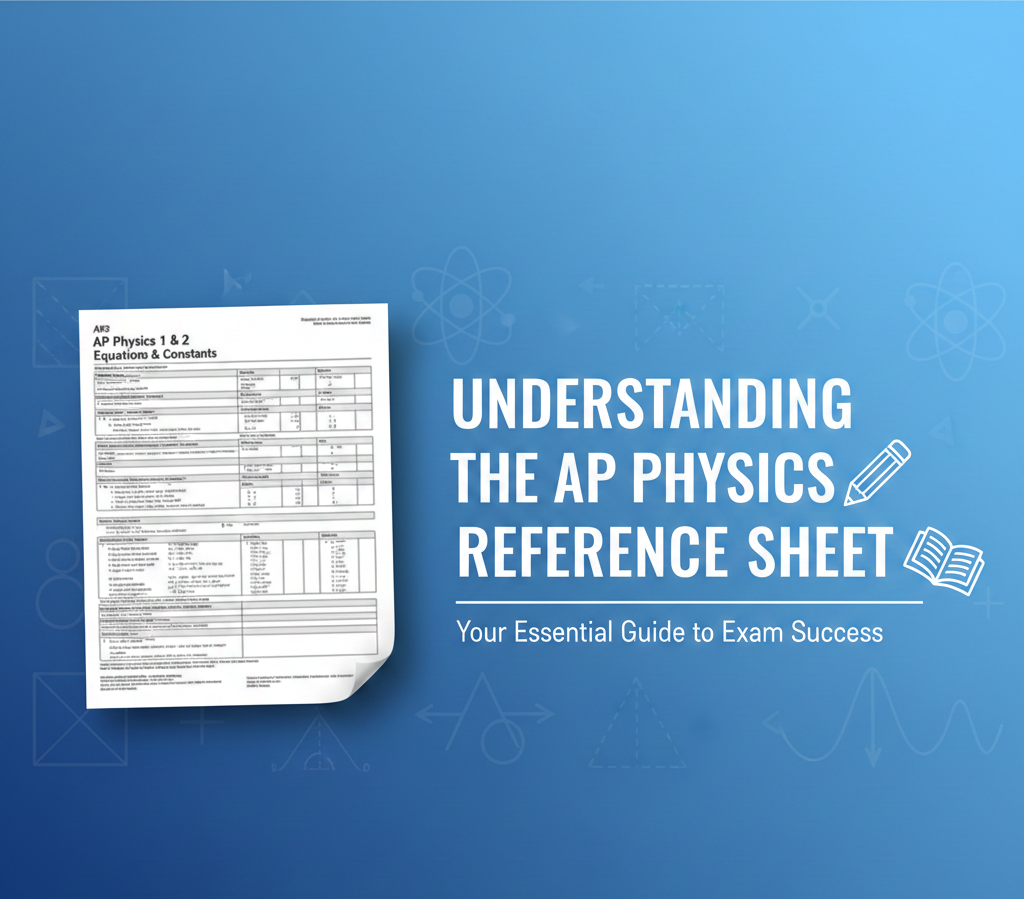
The AP Physics reference sheet is a two-page document provided during the exam. It includes essential formulas and constants needed for solving problems across various physics topics. Let’s take a closer look at what’s included.
Key Components of the AP Physics Reference Sheet:
-
Constants and Units
The reference sheet lists the most common constants you’ll need for calculations. These include values for the speed of light, gravitational constant, Planck’s constant, and more. Having these values at your fingertips will save you time on the test. -
Equations and Formulas
You’ll find a wide range of formulas for different areas of physics. For example, equations related to motion, electricity, magnetism, waves, and thermodynamics are all laid out clearly. These formulas are crucial for solving problems quickly and accurately. -
Physical Constants for AP Physics C
In AP Physics C, you’ll also find more advanced constants related to calculus-based problems, like the moment of inertia or electric field strength.
Why Is the AP Physics Reference Sheet So Important?
The reference sheet isn’t just a cheat sheet – it’s designed to ensure all students have equal access to the key formulas and constants, so you won’t be expected to memorize everything. But understanding how to use it effectively is key to making the most of it during the exam.
How to Use the AP Physics Reference Sheet Efficiently
Knowing what’s on the sheet is only part of the battle. The real challenge is using it in a way that enhances your performance. Here are some tips to maximize its potential.
1. Familiarize Yourself with the Layout
The first step is to become comfortable with the reference sheet’s layout. Practice using it during mock exams so you know exactly where to find the formulas when time is of the essence.
2. Use the Constants Wisely
You don’t need to memorize constants like the gravitational constant or the mass of an electron — they’re right on the sheet. But don’t waste time looking for them when you don’t need them. Familiarity with what’s listed will save precious seconds.
3. Practice with the Formulas
Practice applying the formulas on the reference sheet to problems before the exam. This will help you remember them under exam conditions and learn how to quickly recognize which formula to use for a specific type of problem.
4. Don’t Rely on It Too Much
While the reference sheet is a helpful tool, it’s important to not rely on it for every question. The more familiar you are with the concepts, the less you’ll need to reference it. Use it as a supplement, not a crutch.
AP Physics 1, 2, and C: Different Sheets for Different Exams
The content of the AP Physics reference sheet differs slightly depending on the exam you’re taking.
AP Physics 1 and 2 Reference Sheet
For AP Physics 1 and 2, the reference sheet provides formulas for mechanics, electricity and magnetism, thermodynamics, waves, and optics. The material is designed to help with problem-solving without diving into calculus-based equations.
AP Physics C Reference Sheet
AP Physics C includes more advanced material, especially in the areas of mechanics and electricity. The reference sheet for this exam includes formulas for topics like rotational motion, electromagnetic fields, and differential equations.
Understanding the differences between the sheets for each exam will help you prepare more efficiently, so you know exactly what to focus on.
Tips for Effective AP Physics Exam Preparation
While the AP Physics reference sheet is a valuable tool, it’s only one part of your study strategy. Here are some additional tips to help you succeed on exam day:
-
Focus on Conceptual Understanding
Understanding the fundamental principles of physics is just as important as memorizing formulas. Make sure you know how to derive equations and apply them to real-world scenarios. -
Solve Practice Problems
The more practice problems you solve, the better you’ll get at using the reference sheet. Practice under timed conditions to simulate the actual test environment. -
Review the Key Formulas Regularly
Even though the formulas are on the reference sheet, reviewing them regularly will help you commit them to memory, saving you time during the test.
Frequently Asked Questions (FAQs)
Q1: Do I need to memorize the formulas on the AP Physics reference sheet?
No, you don’t need to memorize the formulas. They are provided on the reference sheet, but you should still familiarize yourself with where they are so you can quickly find them during the test.
Q2: How can I practice using the reference sheet?
Practice using the reference sheet during mock exams and timed quizzes. This will help you get comfortable with the layout and ensure you can find the necessary formulas under pressure.
Q3: Are the reference sheets different for each AP Physics exam?
Yes, the reference sheets for AP Physics 1, 2, and C differ slightly, with AP Physics C containing more advanced formulas and constants due to the calculus-based nature of the exam.
Q4: Can I bring my own reference sheet to the exam?
No, you must use the official reference sheet provided during the exam. No personal notes or additional sheets are allowed.
Conclusion
The AP Physics reference sheet is an invaluable tool during your exam preparation and on test day. By understanding its contents and how to use it efficiently, you can save time and improve your problem-solving accuracy. Remember, the key to mastering the AP Physics exam is not just knowing the formulas, but understanding how and when to apply them.
Good luck, and don’t forget to practice regularly to ensure you can make the most out of your reference sheet!