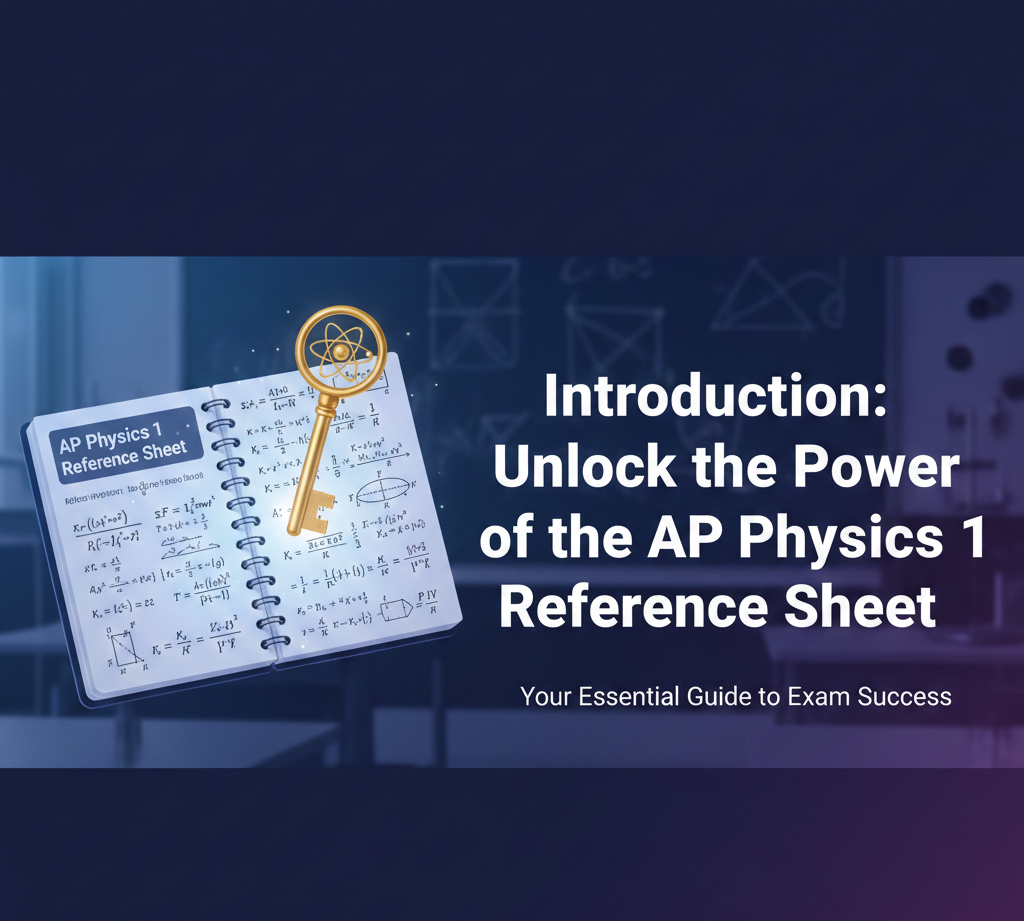

Introduction: Unlock the Power of the AP Physics 1 Reference Sheet
If you’re preparing for the AP Physics 1 exam, you know how important it is to have every advantage in your corner. One such advantage is the AP Physics 1 Reference Sheet. This valuable tool can make a significant difference in your exam performance, but many students overlook its full potential. In this article, we’ll dive into what the reference sheet contains, how to use it effectively, and why it’s a crucial part of your test-taking strategy. By the end, you’ll feel more confident in using this resource to maximize your score.
What is the AP Physics 1 Reference Sheet?
The AP Physics 1 Reference Sheet is provided during the exam and includes essential formulas, constants, and unit conversions that are crucial for solving problems on the test. Unlike other subjects, where you need to memorize every detail, this sheet offers you a helping hand with commonly used information.
Key Components of the Reference Sheet:
-
Physical Constants: Such as the gravitational constant (G), the speed of light (c), and the elementary charge (e).
-
Equations: Includes formulas for mechanics, electricity, magnetism, and waves—critical for solving the problems you’ll face.
-
Unit Conversions: These make it easy to convert between different units of measurement, a common task in physics problems.
-
Unit Definitions: Definitions for fundamental units like meters, kilograms, and seconds to keep everything aligned during calculations.
How to Make the Most of the Reference Sheet
The AP Physics 1 Reference Sheet is an invaluable resource, but its effectiveness depends on how well you know how to use it. Here are some strategies to help you maximize its potential.
1. Familiarize Yourself Before the Exam
The more comfortable you are with the reference sheet, the better. Don’t wait until the exam day to start using it. During your study sessions, practice solving problems while referring to the sheet. This way, you’ll become quicker at finding the necessary formulas and constants during the actual exam.
2. Use the Formulas, But Don’t Over-rely on Them
While the reference sheet provides key formulas, understanding how to apply them is critical. Simply memorizing the equations isn’t enough—you need to know when and how to use them. Be sure to review how each formula fits into the larger concepts in physics, so you don’t waste time searching for the wrong equation during the exam.
3. Understand Unit Conversions
Many questions in AP Physics 1 require you to convert units, whether it’s from meters to kilometers or joules to electron volts. Having the conversion factors on hand can save you precious time. Practice with different unit conversions until you feel confident you can make the switch quickly when needed.
4. Know the Constants
Physics problems often use standard physical constants. Understanding how to use constants like the gravitational constant (G) and the universal gas constant (R) will help you solve problems with minimal effort. Keep these constants in mind as you study, and make sure you know where to find them on the sheet.
Common Mistakes to Avoid with the Reference Sheet
Even though the AP Physics 1 Reference Sheet is a great tool, it’s not a magic solution. Here are some common mistakes students make when using it and how to avoid them:
1. Relying Too Much on the Sheet
The reference sheet is meant to aid you, not do the work for you. If you find yourself constantly looking at it for every question, you might not fully understand the concepts. Instead, use the sheet to confirm answers or quickly reference formulas you don’t have memorized.
2. Not Practicing with the Sheet
Some students underestimate the importance of getting familiar with the reference sheet before the exam. Simply looking over it once or twice won’t help when you’re in the middle of a time-sensitive exam. Practice with it during your mock tests to build your confidence and speed.
3. Missing Crucial Details
The reference sheet is packed with useful information, but it can also be overwhelming. Make sure you’re familiar with where to find key formulas and constants quickly, so you’re not wasting time during the exam.
Frequently Asked Questions (FAQs)
What’s the best way to study for AP Physics 1 with the reference sheet?
The best way to study is to use the reference sheet while solving practice problems. Familiarize yourself with the sheet’s layout, practice applying the formulas, and make sure you understand the concepts behind each formula.
Is it possible to memorize the formulas instead of using the reference sheet?
While it’s beneficial to have a strong grasp of key formulas, you’re still allowed to use the reference sheet during the exam. It’s best to balance memorization with strategic use of the sheet for quick reference.
How can I ensure I don’t waste time searching the reference sheet during the exam?
Practice is key. The more you familiarize yourself with the sheet and how to navigate it, the quicker you’ll be at finding the right formula or constant during the exam. Use it regularly during study sessions.
Conclusion: Master the AP Physics 1 Reference Sheet for Success
The AP Physics 1 Reference Sheet is more than just a tool—it’s a gateway to easier problem-solving during the exam. By understanding how to use it effectively, you can save time, reduce stress, and boost your score. Remember, the key to success is practice. Get comfortable with the sheet, apply it confidently, and you’ll be ready to tackle any physics challenge that comes your way.